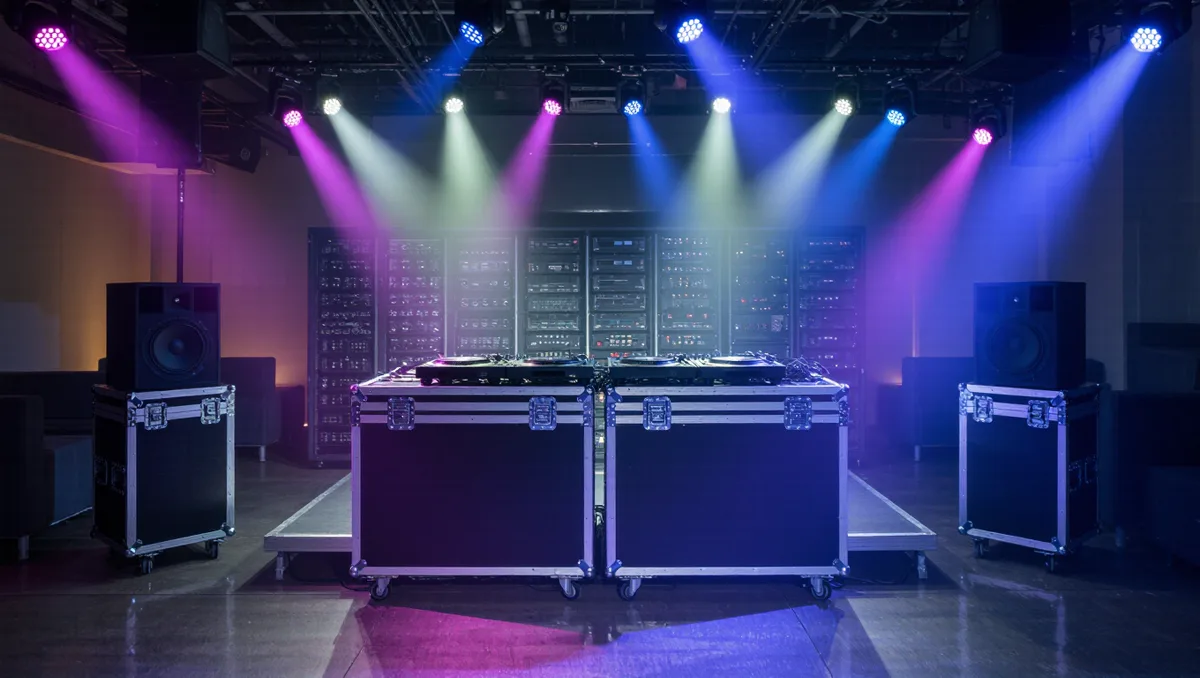
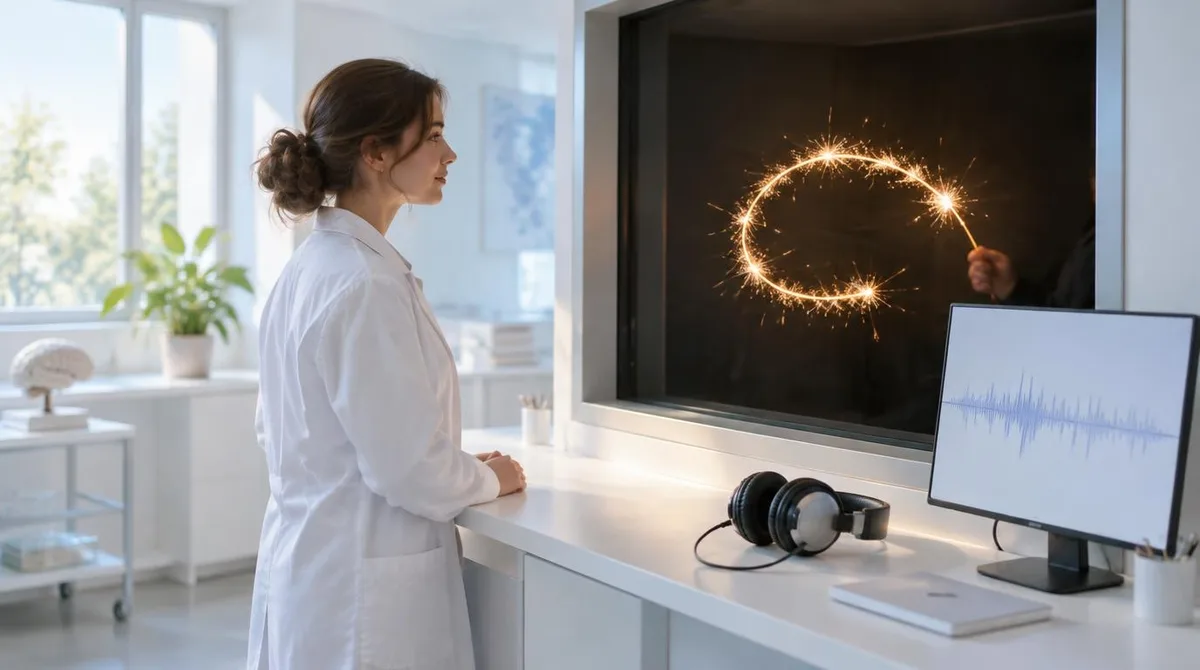
Sensory memory is the first and shortest stage of memory. It holds a raw register of sight, sound, or touch after the stimulus has ended. The hold lasts a fraction of a second up to a few seconds. Nothing here calls for attention or effort. The register simply keeps the world on hand long enough for the next stage to read it.
The store is brief by design rather than by accident. Vision keeps material for roughly a quarter of a second. Hearing keeps it for about two to four seconds. Those two numbers, and the tests behind them, mark the doorway every perception must pass. In the classic three-stage model, this register is the first box. Short-term memory is the second.
A Sparkler and a Burning Coal
The visual form can be seen at any fireworks show. A moving sparkler draws a trail of light. The spark itself sits at one point at a time. The trail is the register outlasting the spark. The effect is old. An early estimate by Segner held that a glowing coal must circle in under one hundred milliseconds for the eye to see one unbroken ring.
The auditory form buys time. A sentence becomes clear only after its last word arrives. Sound must linger a moment so meaning can catch up. Touch keeps its own register, called haptic memory. It runs through the body-sense system and fades fast as well. The body also tracks limb place. Anesthesia studies put that register at two to four seconds of precise hold. Taste may keep a register too. It is simply harder to test.
Sperling and the Vanishing Letters
The visual register was measured by George Sperling in 1960. He flashed a grid of twelve letters for fifty milliseconds. Asked to report all of them, viewers managed four or five. He then added a tone after the flash. The tone cued a single row. Viewers named the cued row well on about three of four trials. The math implies that nine to twelve letters were briefly present. Most were gone before they could be spoken. Once the cue came about one second after the flash, the cued edge was gone. That delay marks the outer limit of the store.
What Sensory Memory Is Not
The register is often mistaken for attention or for short-term memory. It is neither. Sensory memory is automatic. It sits outside cognitive control. Short-term memory holds a small set of items for up to about thirty seconds with rehearsal. Only a sliver of the register ever reaches it. The register is also not a photograph. It keeps basic features at high capacity, up to about twelve visual items, and then drops nearly all of them.
Why the Buffer Matters
A buffer this short still earns its place. The world arrives in pieces. Each glance lands a new fragment of the scene. The visual register overlaps the fragments just long enough to smooth them. Without the auditory version, speech would lose its opening syllables before its endings arrived. Without the visual one, a moving light would read as separate flashes. Sensory memory is the reason daily life feels seamless. This connects to our earlier piece, Implicit Memory: The Skills and Habits Formed Without Conscious Recall.
Conclusion: The Half-Second Doorway
The durations are settled. About a quarter second for sight, and seconds for sound. The jobs are settled too. Hold, hand off, discard. What remains open is selection. How the brain picks the tiny share of buffered material that survives into short-term memory is still being traced. The doorway is measured. The doorman is not. Readers following this should also see Semantic Memory: How the Brain Stores Facts, Meanings and Categories.