
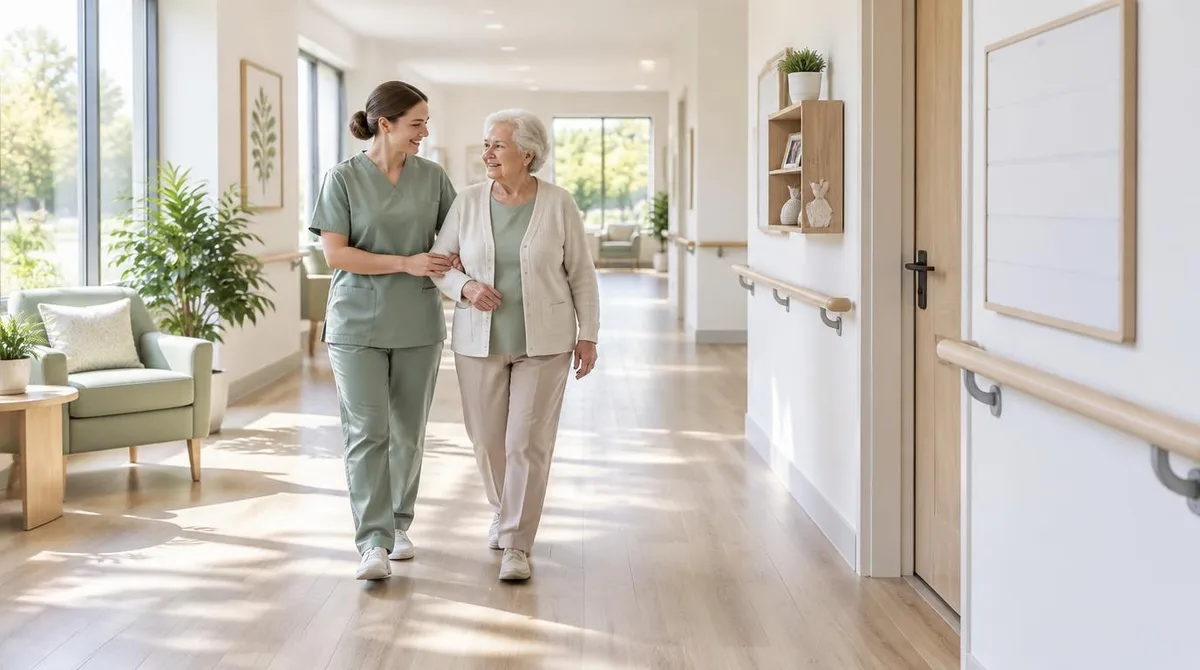
Memory care facilities are homes built around one need: safe support for people living with Alzheimer's or another dementia. The Alzheimer's Association describes them as special care units geared to the needs of such residents. They may sit inside a larger assisted living site or stand alone. Some lock against wandering. Some do not. That gap matters when families compare choices.
The National Institute on Aging frames the wider field. Long-term care, it explains, covers services that meet health and personal needs once daily tasks can no longer be done alone. Memory care is one branch of that tree. This guide walks through what these homes offer and how to judge them. Costs sit outside its scope, since needs and state rules vary too much for one number to travel well. Readers following this should also see Semantic Memory: How the Brain Stores Facts, Meanings and Categories.
What memory care facilities provide
The model rests on structure. Design geared to dementia cuts confusion, with clear paths and simple layouts. Activities run on a set clock. Staff get training in dementia care, though state rules on staffing and disclosure vary widely. The Association notes that some states make communities lay out special-care fees and services in writing. Those papers typically cover trained staff, adapted activities and care for hard behavior. A tour should confirm which promises are real. Routines matter here. Wake times, meals and activities follow the same shape each day, which lowers confusion for residents.
How memory care differs from assisted living
Assisted living bridges independent housing and nursing homes. It offers meals, help with daily tasks and some health services. Yet no federal rule governs it, and state definitions differ. Not every site offers services geared to dementia. Nursing homes sit at the more medical end. They give around-the-clock care and long-term treatment, under state and federal rules. Memory care units can live inside either type. The label alone says little until questions stand behind it. Readers following this should also see Implicit Memory: The Skills and Habits Formed Without Conscious Recall.
How families judge a community
The Association suggests a slow, ordered process. Visit several sites, some unannounced, at varied hours and at meals. Ask each for its latest survey report and its special care disclosure form. Bring a written list. Good questions include how much dementia training the staff get, what staffing ratios look like and whether a nurse or doctor is on site. Families also probe activities, safety steps, meal quality, and how easily a resident finds the way around. The federal Medicare program posts nursing home data that adds a third-party check. Notes help as well. A short written log from each visit keeps details straight weeks later. Two sets of eyes beat one, so a second family member on tour is worth the trouble.
What a seal can and cannot signal
One outside marker exists for weighing memory care facilities. The Joint Commission, working with the Alzheimer's Association, runs a memory care credential for assisted living sites and nursing homes. Candidates must already hold the commission's Gold Seal and pass an on-site review against strict standards. Certified sites must show deep dementia training among staff, programs shaped around each resident, and a calm space that limits noise and confusing sights. Family support groups count too. The credential signals organized effort, not perfection. Many good homes lack it, so it works best as one data point among several.
Conclusion: match the setting to the person
No scorecard settles the choice alone. Needs shift as dementia advances, and a place that fits this year may not fit the next. The durable advice is slow and plain: visit more than once, read the inspection file, and ask concrete questions about staffing and routine. The open question is rarely which site ranks first. It is which space fits one person, on one day, with one disease course. The disease moves at its own pace, and so must the review.