
Implicit vs explicit memory is the deepest split in memory science. Explicit memory holds what a person can state: facts, faces, events. Implicit memory holds what a person can only do: skills, habits, reactions. The first kind answers questions. The second kind performs. And one patient, more than any experiment, showed that the two can fail separately.
The distinction is old, but the proof is anatomical. Damage to one set of circuits erases conscious learning while sparing the silent kind. Textbook authors sum up the divide as knowing what versus knowing how. The evidence behind that tidy phrase is a case known by two initials. This connects to our earlier piece, Neuroscience Jobs Today: Where the Degree Actually Leads.
Where implicit vs explicit memory divide
The line runs through consciousness, not through difficulty. Explicit memory, also called declarative memory, has a conscious component. It covers facts, such as a capital city, and events, tied to time and place. Retrieval brings the content into the open, where it can be spoken.
Implicit memory, also called nondeclarative, has no such component. It spans skills and habits, priming, classical conditioning, and simple forms of learning such as habituation. The signature is indirect. The learning is visible only in what the hand or the eye does, never in what the mouth can say.
One patient, two kinds of learning
In 1957, a surgeon and a psychologist reported the consequences of an operation for epilepsy. The surgery had removed the hippocampus on both sides of the brain. The patient, H.M., then lived inside a short present. He could not remember the day before. Childhood memories stayed, but new facts and events refused to stick.
His implicit systems carried on. He improved at motor tasks with practice, session after session. He had no memory of the practice itself. Earlier exposure still helped him complete word and picture fragments he did not recall seeing. Even a faint sense of familiarity for seen images lasted months. Two kinds of learning, one broken, one whole. Day after day, the same lesson came back. The hands held what the mind had lost.
A geography of hidden learning
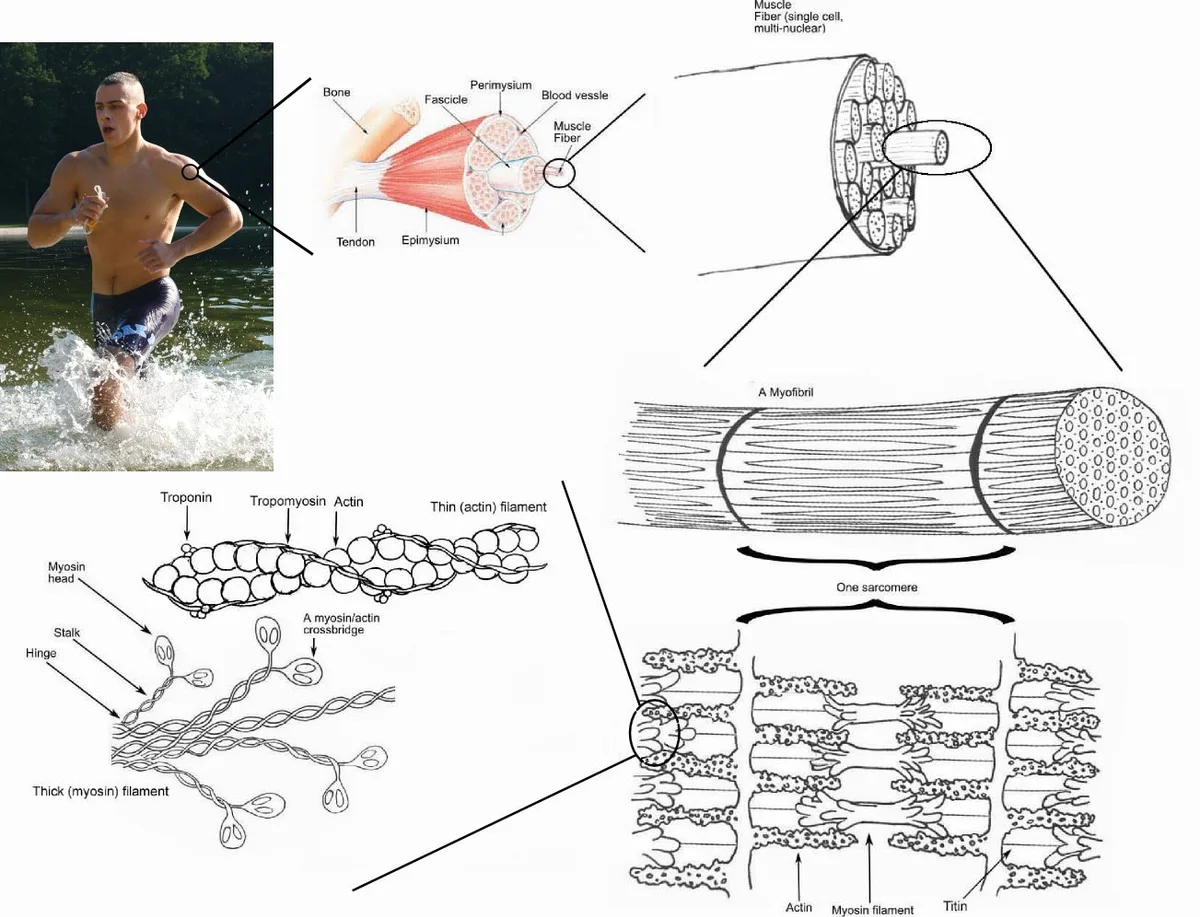
The spared abilities pointed to a map. The striatum, deep beneath the cortex, carries skills and habits. The neocortex supports priming. The amygdala holds emotional memories. The cerebellum handles simple associative learning. On the explicit side, the hippocampus and its neighbors do the filing.
The broader lesson is distribution. Memory has no single storage site. Different forms live in different neighborhoods, and a lesion in one neighborhood leaves the others working. That is why H.M. could learn without knowing that he had learned. Think of a city of trades. Bakers on one street, smiths on another, clerks in between. Damage one street, and one trade falters while the rest carry on.
What the dissociation does not prove
The implicit vs explicit memory split, drawn from lesions, describes failure. It does not describe cooperation. A lesion shows what a structure is needed for, not how the intact parts act together in a healthy brain.
There are practical cautions as well. H.M. was one person, and his surgery touched tissue beyond the hippocampus. His spared skills prove that those forms can survive without the hippocampus. They do not prove the two systems live apart in ordinary life.
Conclusion: a border, not a wall
The evidence for two memory systems is now firm, from patients, imaging, and decades of experiments. What stays open is traffic across the border. How does silent practice shape what a person can say? When does explicit knowledge seep into habit? Those crossings remain the least mapped part of the map.